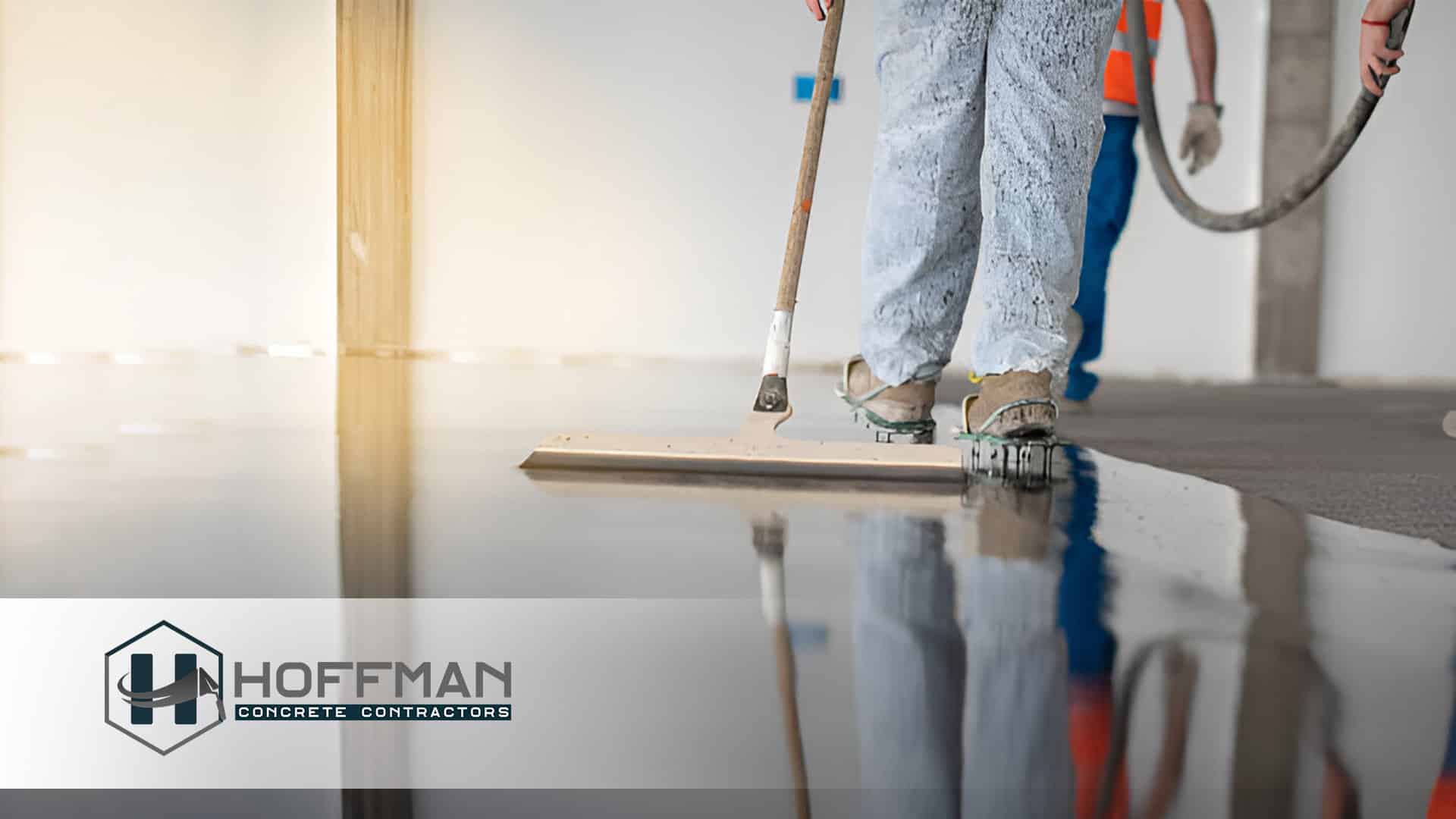
At Hoffman Concrete Contractors - Media, we specialize in top-notch concrete finishing services designed to enhance both the durability and aesthetic appeal of your surfaces. Our skilled team utilizes advanced techniques and high-quality materials to ensure a flawless finish on every project, whether it’s driveways, patios, or commercial flooring. We pay meticulous attention to detail, offering various finishing options like smooth trowel, broom, and stamped surfaces that can elevate the look of your space. With a commitment to excellence and customer satisfaction, we strive to provide results that not only meet but exceed your expectations, making sure your concrete surfaces look stunning and last for years to come.
We proudly serve Pennsylvania from our two concrete finishing facilities:
Concrete finishing involves several techniques that can enhance the appearance and durability of the surface. Common finishes include broom, troweled, stamped, and exposed aggregate. Broom finishing provides a textured surface that helps improve slip resistance. Troweled finishes offer a smooth aesthetic suitable for indoor applications. Stamped finishes allow for creative designs that mimic natural materials, while exposed aggregate brings attention to individual stones set in the concrete.
Each finish comes with unique characteristics that influence its application and maintenance. Broom finishes are cost-effective and easy to apply. However, they may require more frequent cleaning. Troweled surfaces are appealing but can become slippery when wet. Stamped concrete offers visual interest but may be more prone to cracking if not properly maintained. Exposed aggregate is durable and low-maintenance, yet achieving the desired look requires precision during the finishing process. Choosing the right finish depends on the specific project requirements and environmental conditions.
Different types of concrete finishes offer unique advantages and disadvantages that can significantly affect the final appearance and durability of a project. For instance, a polished concrete finish provides a sleek, modern look that is easy to maintain. However, achieving this level of polish often requires specialized equipment and expertise, which can increase labor costs. Stamped finishes are popular for their ability to mimic natural stone or brick, providing aesthetic appeal. Yet, these finishes can be prone to wear over time, especially in high-traffic areas.
On the other hand, exposing aggregate creates a textured surface that is both durable and slip-resistant, making it a practical choice for outdoor patios or walkways. This method can be labor-intensive, involving careful washing and grinding to achieve the desired look. A broom finish is another option that offers excellent traction and is relatively cost-effective. Despite its practicality, it may not be as visually appealing as other finishes. Understanding the pros and cons of each option allows homeowners and contractors to select the finish that best fits their project's needs and budget.
Achieving a professional finish on a concrete surface involves attention to detail and adherence to best practices. Start by ensuring that the mix is appropriate for the project. The right water-to-cement ratio is vital for workability and strength. Using quality materials can significantly influence the final appearance. Preparing the subgrade properly and placing the forms accurately will prevent issues from arising later in the process. A smooth, level surface often comes down to careful planning and execution during pouring and finishing phases.
Timing plays a crucial role in the finishing process. Begin finishing the surface as soon as the concrete reaches the right consistency. At this stage, the surface should still be soft enough to work with, yet firm enough to support tools without damaging it. Use a magnesium float to create a smooth texture before following up with a trowel for a polished finish. Different finishing techniques can help achieve desired effects, but it is critical to avoid overworking the surface. Patience and methodical approach will contribute to an overall successful outcome.
Achieving a professional concrete finish requires attention to detail and adherence to best practices. Begin by thoroughly preparing the surface, which includes cleaning and ensuring a level base. Employing the right types of tools, such as floats, trowels, and edgers, plays a critical role in achieving a smooth and consistent finish. Regularly checking the mix for proper consistency is equally important, as it influences how well the concrete will adhere to the surface and the overall appearance of the final product.
Timing is also essential; techniques such as troweling should be performed at the right moment when the concrete has set enough to support the equipment but not too hard that it hinders the finishing process. Consistent monitoring throughout the application helps in adjusting techniques to preserve quality. Additionally, keeping the work area clean minimizes the risk of debris mixing with the surface, which can compromise the aesthetic appeal and strength of the concrete finish.
Weather conditions play a crucial role in the curing and finishing of concrete. High temperatures can cause rapid evaporation of moisture from the surface, leading to cracks and a compromised surface finish. Conversely, cold weather can slow down the curing process, resulting in potential issues with strength and durability. Contractors must keep a close watch on temperature and humidity levels, adjusting their finishing techniques accordingly to ensure the best possible outcome.
In addition to temperature, rain and wind can also affect finishing efforts. Rain can disrupt the finishing process, especially if it falls shortly after placement. Wind can exacerbate evaporation, increasing the risk of surface defects. Taking precautions during inclement weather, such as using windbreaks or applying curing compounds, can help mitigate these risks. Understanding the interplay between weather and concrete properties can enhance the quality and appearance of the finished surface.
Weather conditions can have a significant impact on the curing and finishing of concrete. In hot weather, the rapid evaporation of moisture from the surface can lead to issues like cracking and inadequate curing. To mitigate these problems, contractors should consider using retarders in the concrete mix, applying moisture-retaining curing compounds, and scheduling finishing work during cooler times of the day. This helps maintain the appropriate moisture levels and allows for a smoother finish.
Conversely, cold weather requires different approaches to ensure the integrity and appearance of the concrete. Using heated enclosures can help maintain a proper curing temperature. Additionally, selecting faster-setting mixtures and avoiding excessive moisture during the finishing process can prevent freezing issues. Understanding the specific needs for both hot and cold environments ensures the quality of the finished product remains consistent and durable.
The most common types of concrete finishes include broom finish, trowel finish, exposed aggregate, stamp finish, and polished concrete. Each type has its own unique appearance and texture.
The pros of a broom finish include its slip-resistant texture and its cost-effectiveness. However, it can be less visually appealing compared to other finishes and may require more maintenance over time.
To achieve a professional concrete finish at home, ensure proper surface preparation, use the right tools, follow best mixing practices, and pay attention to curing and drying times. It may also be helpful to practice your finishing techniques on a small area before tackling larger surfaces.
Weather conditions can significantly impact concrete finishing. High temperatures can cause rapid evaporation, while cold temperatures can slow curing. It is important to adjust your finishing techniques based on current weather conditions to avoid defects in the surface.
In hot weather, consider using retarders to slow curing and misting the surface with water to prevent quick evaporation. In cold weather, use insulation blankets to retain heat, and be mindful of the setting time, as it may take longer to finish and cure.

Copyright © Hoffman Concrete Contractors - Media. All Rights Reserved